
Three people in love. One family ready to tear them apart.

Polyamory Novella
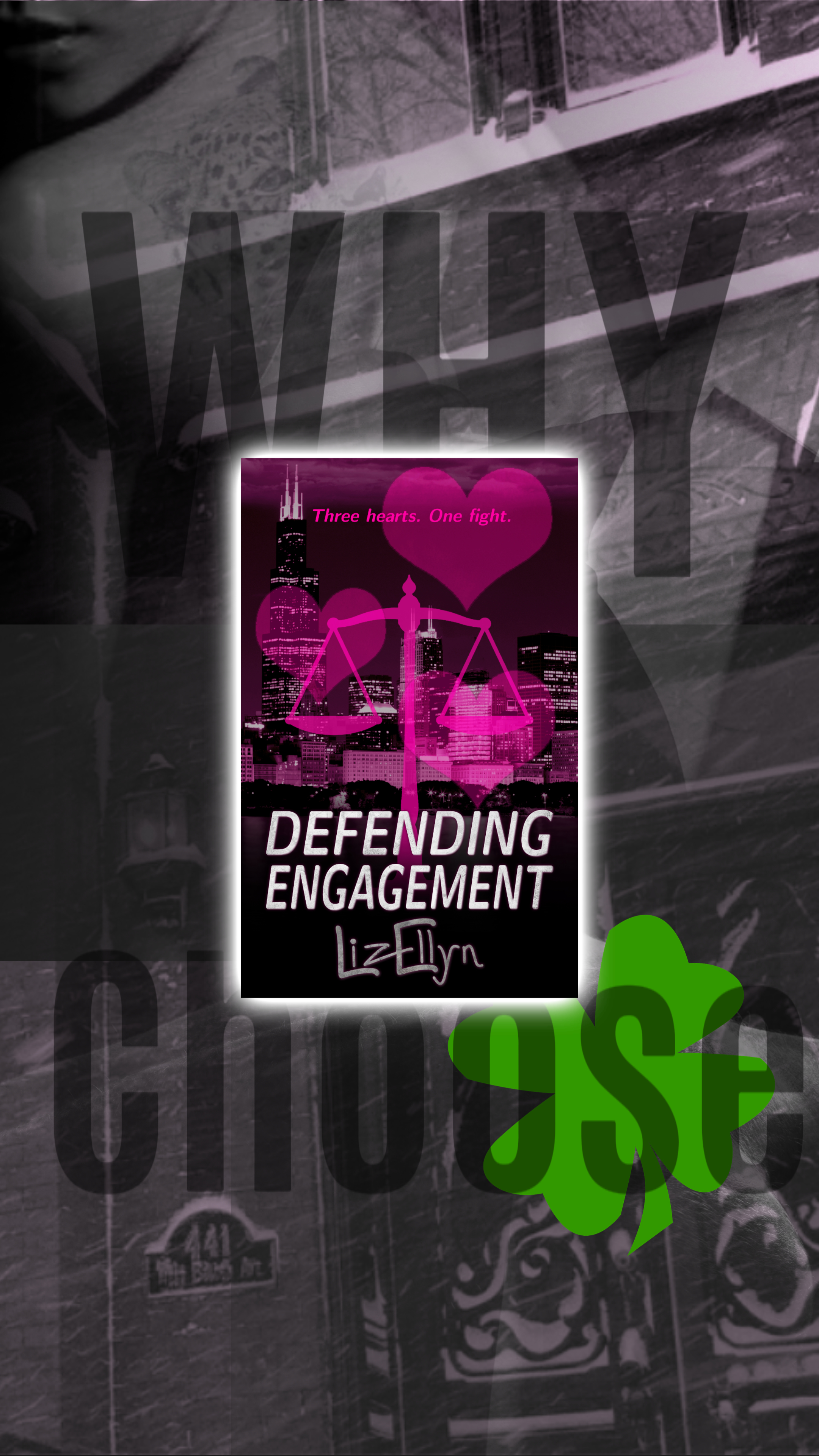
Defending Engagement by Liz Ellyn

JD, Ian, and Sasha share a love that’s passionate and all-consuming. At home, their polyamorous relationship burns bright, but beyond their Chicago home, judgment waits to tear them apart.

At the O’Malley family’s annual St. Patrick’s Day party, whispers turn to outright condemnation—immorality, illegality, and forbidden love. JD and Ian fear the scorn will drive Sasha away. They underestimate Sasha’s ability to eviscerate closed-minded arguments and fight to defend their love.

It is time to take a stand and defend their relationship.

Comparing jealousy in relaitonships

March 15, 2025- Chicago will dye the river bright green.

Originally, 100 pounds of a fluorescein dye, typically used to trace water currents, was used to create a vibrant green hue.

Today, the dye used is an eco-friendly vegetable-based dye, ensuring minimal impact on the river’s ecosystem. Additionally, the dye is now applied by specialized boats equipped with sprayers, ensuring a more even and vibrant coloration of the water.

Why is jealousy associated with the color green?

Historical and Cultural References:
Greece – the color of the mythological goddess Hera, who was frequently depicted as envious or jealous.
Medieval Europe – coined the term green “green-eyed monster” of jealousy

Physiological Responses:
When people experience jealousy or envy, they may feel nauseous or sick to their stomachs. Green can refer to the color of bile.

Literary and Artistic Depictions:
Shakespeare – famously referred to it in “Othello.”

Psychological Associations:
Some psychologists suggest that the association may be partly due to the way the human brain processes emotions. Green is often associated with feelings of sickness or imbalance, which are similar to the emotional turmoil experienced during episodes of jealousy or envy.

Overall, the association between jealousy and the color green is likely a complex interplay of historical, cultural, physiological, and psychological factors, rather than a single explanation.